
Insights for Leaders Navigating
Visibility, Credibility, and Growth.
From media strategy to reputation management, we explore the trends shaping public perception and share the approaches that drive measurable results for growing brands.
Throwing a launch party is an important part of a company’s marketing plan and to do it well requires a serious investment of resources – both human and fiscal. Whether you’re celebrating a new product or a new company, the launch party provides a critical opportunity to make a good first impression with potential customers, to entice the imagination of potential investors and to encourage an enthusiastic army of brand advocates.
As a communications practitioner providing counsel to clients in a variety of industries, I’ve been fortunate to attend a number of launch events over the years, and in most cases, I leave these parties with a mental checklist of things to do differently or to improve upon for future client events. Recently, I had the pleasure of attending a client launch event that had my inner-critic stumped, and rather than leaving the party with my usual list of things done wrong, I left with a long list of things done right.
The party was hosted by Seattle-based startup Lively, a tech company that connects music fans to their favorite artists by providing high-quality recordings of live performances. Staying true to their roots, the folks at Lively threw an over-the-top party featuring live music performances and local celebrities from Seattle’s music, sports and political scenes. And, while the party was certainly a great time, what was really impressive was an attention to detail that kept the Lively brand front and center throughout the evening.

From Lively logoed wristbands to takeaway gifts including a Lively hangover kit, this attention to the details was in large part due to the expertise of Lively’s CMO Geoff Walker. Walker, who recently ran his own event marketing company, has a long history of producing high-profile events for companies such as RealNetworks and Rhapsody, celebrities including the Foo Fighters and Kevin Spacey, and occasions such as the NFL Pro Bowl All-Star Game. From arrival to departure, the party Walker designed was like a drum driving home the beat of Lively’s vision to celebrate music and the artists’ relationship to their fans.
Not every company is fortunate to have an event expert like Walker on staff, but here are some of the evening’s highlights that you can refer to when planning your own launch party:
1. Make a Great First Impression
Upon arrival, my colleagues and I were greeted by friendly valet attendants who promptly ushered us out of our vehicle and toward the reception area. We passed a brass band playing standards, and strode upon a blue carpet (blue to reflect the company’s logo instead of the traditional red) to take our place in front of the logoed step-and-repeat for keepsake images that we can download and share via social media platforms and that Lively can use in its future marketing efforts. From there, we headed down the reception line to receive logoed wrist bands, a raffle ticket and straight to the bar serving a variety of complimentary cocktails.
2. Select a Theme That Compliments Your Company’s Vision
As a tech and music company, Lively played up the music side of its business and provided two stages alternating live performances by LeRoy Bell & His Only Friends, Young Evils, Hunter Hunted and Portugal. The Man. DJ Niros helped maintain the crowds’ energy level by spinning dance worthy favorites in between live performances. Party attendees were given a special promo code that they could use after the party to download high-quality audio and video from the evening because, well, that’s what Lively does!
3. A Great Mix of Attendees
Family and friends, local celebrities, vendors and investors were all on hand to celebrate the startup, bringing a sense of excitement to the event. And while private parties are not typically newsworthy on their own, Seattle’s Mayor Mike McGinn gave an enthusiastic speech to the crowd of 450-plus guests and helped the company secure this follow-up story in a local technology media outlet: “Mayor McGinn spends final campaign hours hanging with the tech community.”
4. Branding, Branding, Branding!
Everywhere I looked I saw the Lively logo. It was on my party wristband, the cocktail napkins and coasters, on the backs of servers passing hors d’oeuvres, displayed in lights with the help of GOBO projections, behind the artists performing on stage and on the takeaway gift bags. It didn’t stop there. Inside the bag was a Lively T-shirt, a logoed guitar pick key chain and a Lively branded hangover kit, among other goodies.
5. Capture the Evening and Make it Social
Capitalizing on today’s culture of sharing, Lively had roving photographers snapping shots of attendees and providing Polaroid images. Partygoers were then encouraged to snap a shot of the Polaroid and upload the image to personal social media pages with the hashtag #LivelyLounge. Smart and effective.
There is so much more I could say about the Lively Lounge Premier Party, but why write about it when I could just show you – take a look for yourself here.
When I worked for Waggener Edstrom in 2001, I learned we were going to be moving into a sparkly new office building in the Civica Office Commons in downtown Bellevue, Wash. It was exciting. After all, how often does one get to work in a brand new office building?
My anticipation was well founded. Civica Office Commons was beautiful and well thought out for the modern-day worker. The building had a large, light-filled great room with couches and coffee tables instead of a cold, sterile lobby, making it an ideal place to enjoy a cup of coffee or catch up with co-workers. I also liked grabbing lunch at the adjacent SeaStar restaurant or picking up a breakfast sandwich at Starbucks, both of which were conveniently accessible from the great room. In fact, I can safely say in my 20-year career I have never worked in a nicer building.
At that time, I knew little about Schnitzer West, the developer of the Civica Commons. Today, through Communiqué PR’s work for the developer, I know much more about Schnitzer West and its process of developing commercial, residential and multi-use properties. I have learned that projects span years and there is significant research that goes into understanding functional and efficiency needs well before design and construction.
I also know that part of Schnitzer West’s success stems from its financial strength, expertise with risk management, and skill with complex asset operations (e.g., the management of real estate) after a property is completed.
The people with Schnitzer West clearly possess an impressive array of core competencies, but what really sets them apart from the competition is their focus on creating value, which in turns leads to higher-quality properties and superior-to-market returns. Consider the recent sale of The Bravern Signature Residences and North Creek.
The Bravern Signature Residences are luxury apartments in Bellevue, Wash. With an occupancy rate of 94 percent, the apartments are home to entertainers, professional athletes and business people. Schnitzer West recently sold the towers, and according to our local media, the sale of the Bravern apartments set a record for the region.
In a separate transaction on the same day, Schnitzer West also sold North Creek, a collection of 11 office buildings in Bothell, Wash. With both properties, Schnitzer West had significant interest from multiple potential buyers.
The media coverage of these announcements paints a more complete picture of these sales and their significance. To date, there have been more than 10 articles written about the two transactions. Here are links to a few of the articles:
- Bravern apartment sale sets record for Puget Sound region
- Schnitzer West sells Bravern apartment towers
- Schnitzer West sells two Eastside properties for $476 million
- Schnitzer West sells Bravern towers and 11 Bothell buildings for a total of $475M
- Bellevue, Wash., Apartments Sold for Nearly $700,000/Unit
Clearly, Schnitzer West’s commitment to creating value was important to the sales of these properties, but in closing, I think it is also important to note that the proceeds from the transactions also will help our region for years to come.
For example, the city of Bellevue and Bothell each got a bump in tax revenue. Dan Ivanoff, managing investment partner with Schnitzer West, told me that Kevin Wallace, a Bellevue City Council member, called to thank him and the team with Schnitzer West for the excise tax paid to the city on sale proceeds. Dan and the Schnitzer West team also have explained in their press interviews that they will use the proceeds from these sales to continue funding the investment firm. This means jobs for construction works, research firms, architects and the like, not to mention we will all benefit from their results (e.g. better work and living spaces).
It’s a skill so seemingly simple that we often overlook its importance. For creative minds, brainstorming ideas might come as easy as breathing. But for the rest of us, sometimes it takes a little inspiration to get our juices flowing.
We’ve all been there—a deadline looming, our mind spinning and the coffee running low, and we just can’t put our finger on that perfect idea. As PR professionals, we constantly churn out strategic plans and counsel to reach our clients’ objectives. Whether coming up with a campaign concept, a topic for a column or inspired talking points, generating the idea(s) can often be the hardest part. Given this, I thought I’d share some tips that I’ve found useful when at your wit’s end:
1) Plan. What’s the (business) problem you’re trying to solve? When applicable, try to always first come up with the overall plan for your task. Arriving at the best answers requires asking the right questions. For example, if writing an article, first identify your audience, tone, purpose and other aspects. Having all the little things set in stone often makes it easier to come up with the more important part—the topic. Developing a solution is near impossible if you don’t first have a clear understanding of the problem.
2) Read. When I’m at a loss, sometimes it helps to take a little inspiration from others and just start reading. Industry blogs, news sites and other relevant materials can help you identify trends or play off of current topics—and can often be the key to arriving at that “aha!” moment.
3) Ask. Your colleagues are one of your best resources for effective brainstorming. Two heads are often better than one, so don’t be afraid to ask for help. And, when possible, brainstorm as a group. Thinking with multiple minds can often be much more effective than going solo, giving you a springboard off of which to bounce ideas and second and third opinions that help to guide your thoughts.
4) Think (strategically) outside the box. Don’t be afraid to let your thoughts stray a bit when brainstorming. Give yourself a time limit—say, 10 minutes—and just let your mind wander, writing down (if it helps) every thought that crosses your mind. As you think, your thoughts will begin to build on top of each other, expand and, hopefully, morph into something actionable. Once time’s up and you’ve thrown out all your thoughts, it also helps to go back and take a deeper look and try to find ways to connect them. Connecting and relating individual ideas often helps you come up with larger, better ones that can encompass multiple concepts at once.
5) Take a break. The saying “sleep on it” applies just as well to brainstorming. If you’re really struggling, often taking a few minutes away from the task at hand can give you the mental stimulation you need. Heading out for lunch, a walk around the block, or even a quick bathroom (or coffee) break can sometimes be enough to put you in the right state of mind.
No matter what your task, you can’t get anywhere without a good idea. Strategic thinking is the key to generating compelling content for any client. So, next time you’re not feeling creative, consider the above brainstorming tips to help you conjure up that winning idea.
What are your best tips for effective brainstorming?
Every few months, it seems, there is a dust up over the role of PR teams in editing articles on Wikipedia.
Most recently, several publications (notably Vice’s Motherboard) reported on the work of a firm devoted almost entirely to editing Wikipedia articles on behalf of various clients. When the firm’s work was discovered, many editors found themselves in hot water with the Wikimedia Foundation, which runs Wikipedia. Their clients, including several named by Motherboard in its article, found themselves unhappily facing negative press.
Situations like these are akin to unforced errors in sports—when an attempt to make a positive play turns into an unexpectedly negative situation (fumble!).
In an effort to maintain neutrality and accuracy and to avoid promotional articles, Wikipedia maintains fairly strict guidelines regarding who can edit entries. It specifically prohibits the conflict-of-interest issues that can arise when PR teams do not disclose their relationships with clients whose entries they are writing.
It is important for PR professionals to note that, to violate Wikipedia’s policies, you don’t have to actually write content that is misleading or inaccurate. You simply have to make edits on behalf of a paying client. Disclosing your relationship with that client can result in your edits being declined, while choosing not to disclose your position as a paid agent can have much more harmful consequences down the road.
For a project as large and unwieldy as Wikipedia, efforts to remain a trusted, neutral and accurate source of information for the public are critical to its success. Certainly, though, anyone who has researched a paper or an article knows that vague, incomplete or misleading articles are not uncommon. This can be frustrating when your organization or client is the one being misrepresented. Nonetheless, for the Wikipedia model to work and for PR teams to maintain their integrity, transparency is crucial.
Too many public relations crises are caused by a practitioner’s decision not to reveal his or her affiliation with a client. As more and more PR work moves into the digital sphere, where content can be scrutinized by a huge number of readers at any time, it is more important than ever to be transparent about the work of your PR team.
At Communiqué PR, one of our guiding values is to always act with integrity: “Our outcomes, and ultimately our successes, are driven by honesty and transparency.”
Good PR teams push for more transparency and accountability, not less, and work to build better trust in a company. When the opposite happens, on Wikipedia or elsewhere, it will create more PR headaches—not solve them.
To avoid this kind of unforced error, apply what we’ll call the “Wikipedia test” and ask yourself and your team:
- Am I appropriately disclosing my role as a PR agent?
- Will this action create long-term PR problems for my client, even if it solves an immediate issue?
- Am I helping to improve transparency and accountability for my firm and for my clients?
And, in the meantime, now might be a good time to brush up on Wikipedia’s guidelines.
Yesterday, in the midst of cramming for a midterm, my computer decided to freeze. Panicked, I ran through all the usual restart motions, but nothing seemed to work. I bolted down to the Apple store, stressing that my hours of work were gone due to this unexpected computer crash. As I walked into the busy store with no appointment, I braced myself for the long night of studying that was bound to follow due to this “crisis” and the large amount of people in the store. I was pleasantly surprised though when I was ushered to the Genius Bar after explaining my situation. The Apple employee ran a diagnostics test on my computer, located the problem, fixed it for the time being, and gave me the step-by-step instructions for how to fix my computer to avoid this problem in the future. What was even better was that this employee did all of this in a matter of 15 minutes. In this desperate time, I was reminded why I continue to buy Apple products.
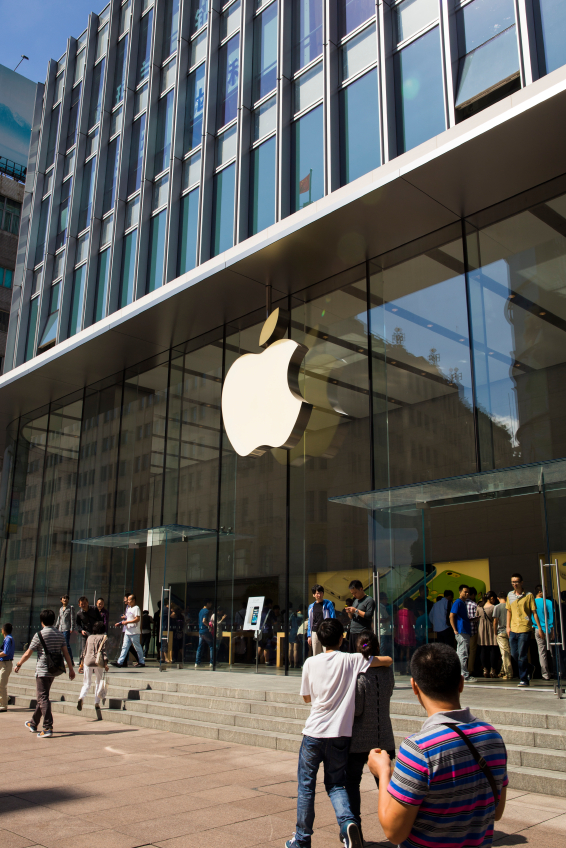
After this experience, I got to thinking about customer service. We live in a customer-based world. It seems that no matter what business class I’m taking at school, whether it is advertising, finance, sales, etc., we are always being told that customer service is essential in the business world today. Customers are constantly looking at your product or service compared to your competitor’s, so why not save them the time of researching this and give them the added value they’re searching for. This competitive edge is easily attained by stepping up your customer service game.
PR Daily has some great tips for how to implement customer service within your own company.
First, additional training may be needed in customer service. It is important though that all employees set this as a priority. Customers will be confused (or you may even lose the customer) if all your employees are not providing the same level of service. The article points out a very important fact, “customer retention costs less than customer acquisition,” so put in that extra effort to keep your clients.
It is also important to encourage employees to resolve customer problems. Customers are more satisfied if they do not have to hunt down people higher up in the company to get their problems solved. Work with your employees to think of creative solutions to your customer’s problem. Clients will be much happier if solving their problem only takes one interaction with your company than many along the way.
Customers also value your company actually listening to them. Ask them questions about their experience and what you can do to improve upon it. Having an open dialogue is important, but actually acting on this feedback is what counts.
The final tip is looking at what other companies are doing. Even though a company may not be in your particular industry, you can still learn from their customer service programs. Some standout companies known for providing continual excellent customer service are Nordstrom, Amazon, Apple, Starbucks and Trader Joe’s. In summary, without your clients you don’t have a business. Keep them happy and you’ll keep their business and also attract more customers. Great customer service is always good PR for your company.
For other reads on customer service, refer to these posts on the Communiqué PR Blog:
After a Tesla Model S caught fire in early October, the company’s stock prices momentarily fell as the public became wary of the Tesla brand. Numerous blog posts and websites depicted the all-electric Model S engulfed in flames on a busy highway. The incident occurred after a piece of metal punctured the high-tech armor plating of the battery compartment. The event provided Tesla with a PR dilemma, but the company wisely addressed the incident head on, and eventually used the event to prove how safe the Model S truly is.
After independent testing by the National Highway Traffic Safety Administration, (NHTSA) the Model S was announced to be the safest car in history. But, the car fire led the public to believe otherwise. With the stock prices plummeting, Tesla needed to implement a PR strategy to drive the critics away. The information came from Tesla’s CEO Elon Musk. From Musk’s Twitter, he linked a blog post that he wrote on the company website. In the blog, Musk mentioned facts that revealed the true safety of the car. The company, still in its infancy (selling more than 2,250 Roadsters since 2008 and an initial order for 6,500 of the Model S in October of 2011) has logged millions of miles with limited incidents.
Musk posted in his blog about the fire ratio of his electric vehicle compared to the other standard gasoline-powered cars. Musk pointed out that, “One for every 100 million miles driven in a Tesla” has resulted in a fire, “while one gas-powered vehicle catches fire for every 20 million miles traveled.”
Due to the popularity of the Model S, and the growing popularity of the electric vehicle, the event was not about to go unnoticed. This car fire threatened to be a press nightmare. Although the news came with minor consequences to shareholders and the view of the company, the CEO used this press spotlight opportunity to prove how safe his cars truly are. Tesla even went one step further to underscore their great customer relations by providing the affected owner with a loaner Tesla.
Tesla turned a situation that had the potential to end very badly into an opportunity to sell their product even harder. The lesson here is to not be overwhelmed during such an event. It is vital to address the situation and the concerns the consumers might have head on. By staying true to their product, Tesla’s PR strategy avoided a potential company crisis.